
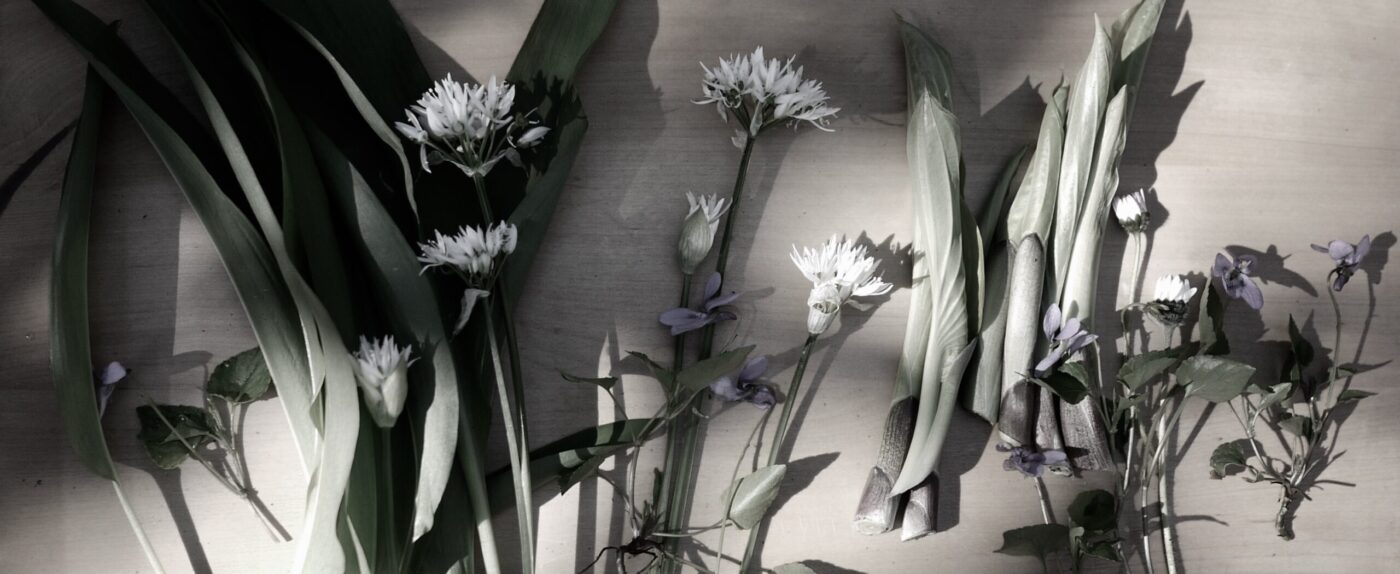
We are primarily a grower of ornamental perennial plants and so are not much use to gardeners who come to us looking for “produce”, plants to grow to eat. But just because a plant isn’t a traditional culinary staple like rhubarb or root vegetables, doesn’t mean that you can’t necessarily eat them. Indeed some quite unlikely ornamental plants and, indeed many typical garden “weeds” are great for eating. As ever, start with small quantities.
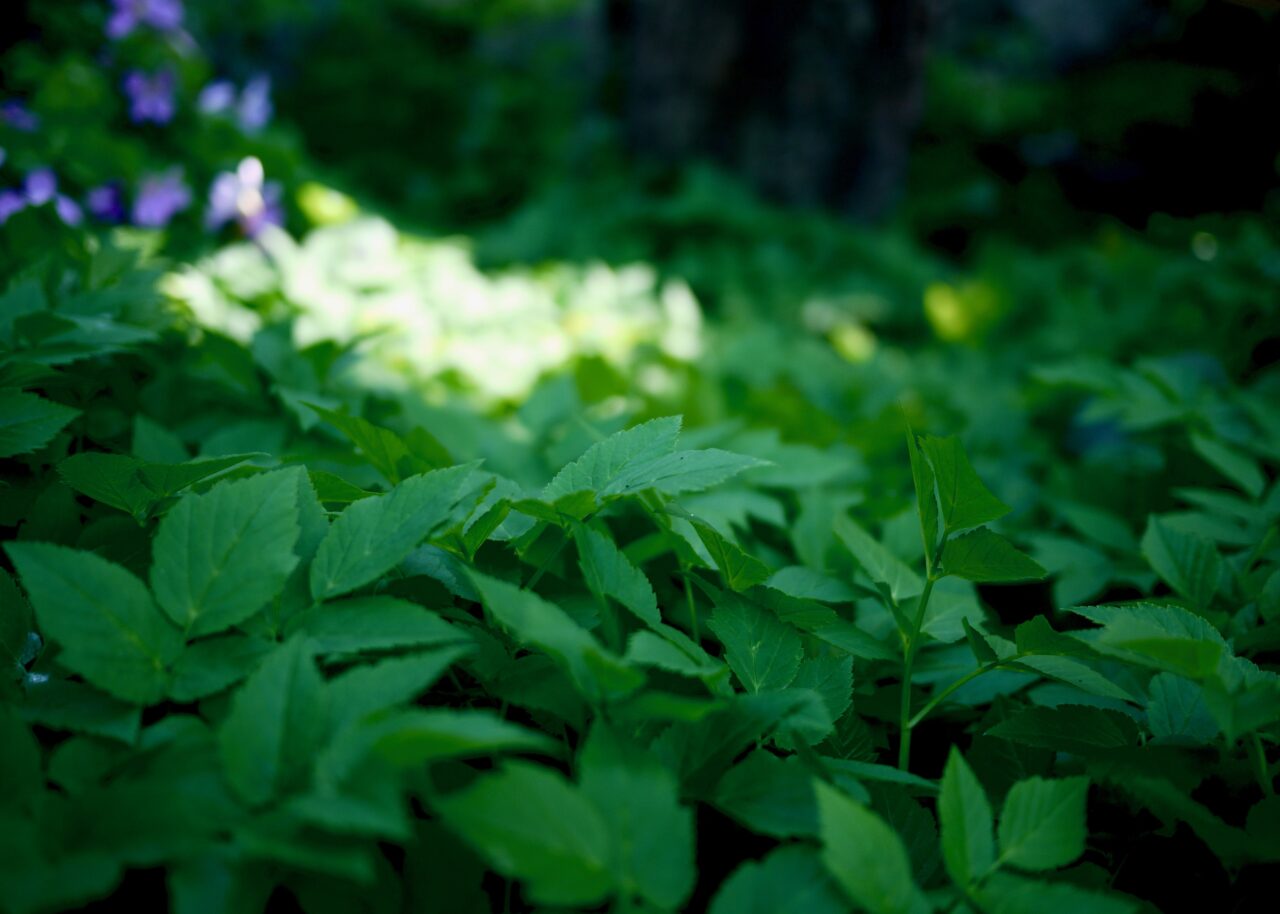
Aegopodium podagaria leaves
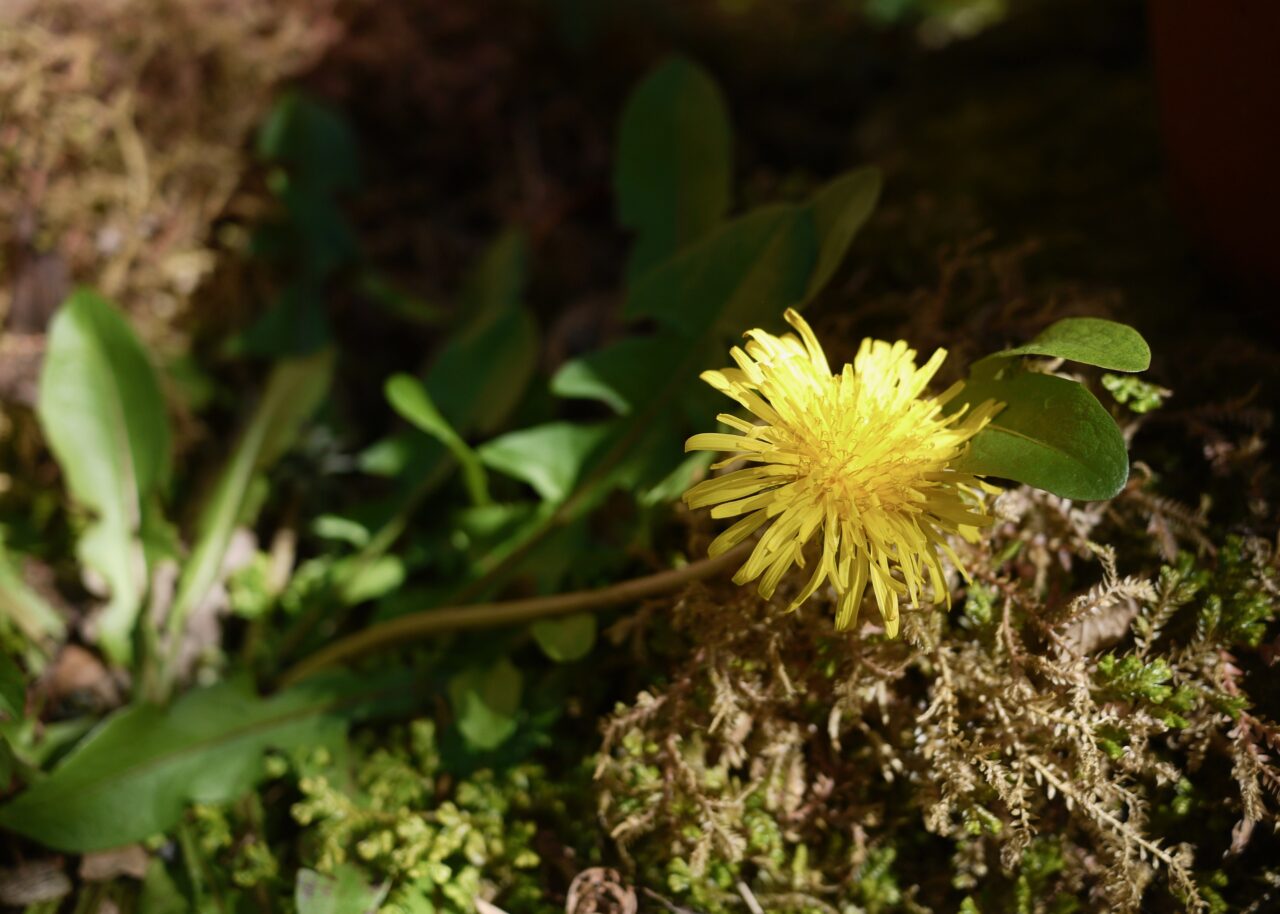
Taraxacum officinale
In rough order of appearance, the first plant you may be less than happy to see is Aegopodium podagraria, or ground elder. A frustration to many gardeners this running umbellifer is a rapid coloniser of cooler soils, and readily returns from pieces of rhizome if not thoroughly removed. It is however quite attractive in its way, and its leaves are edible. Young leaves can be used in salads and have a carrot or parsley-like flavour and scent, and makes a good soup. Older leaves can be cooked like spinach.
The next to present itself is Taraxacum officinale, the common dandelion, a wonderful early plant for pollinators, all of which is edible. The leaves again can be eaten fresh in salads or used in soups. Unopened buds can be eaten in salads, too. The flowers are used in a variety of drinks, and the root used as a coffee substitute.
Cardamine hirsuta, hairy bittercress, is a common weed in horticulture and one of the first plants to establish on disturbed soil. It is a native plant, often found in open woodland sites and damp slopes where it forms droplet-like rosettes with many small white spring flowers followed by exploding seed capsules with cast seed far and wide. It is an annoyance for many gardeners as it litters the empty space between new plantings, but it struggles to compete with perennials once they knit together and is rarely a real problem. The leaves, flowers, and seedpods are all edible raw or cooked. The raw leaves have a sharp taste which is a great contrast in salads.
On the way to scavenging some bittercress, check your lawn for Bellis perennis, the common daisy, hopefully a more welcome sight to most. All parts are edible. Young leaves can be added to salads, or infused into syrups. The flowers and flower buds can be eaten raw or in soups and salads. Flower buds can be pickled as an alternative to capers.
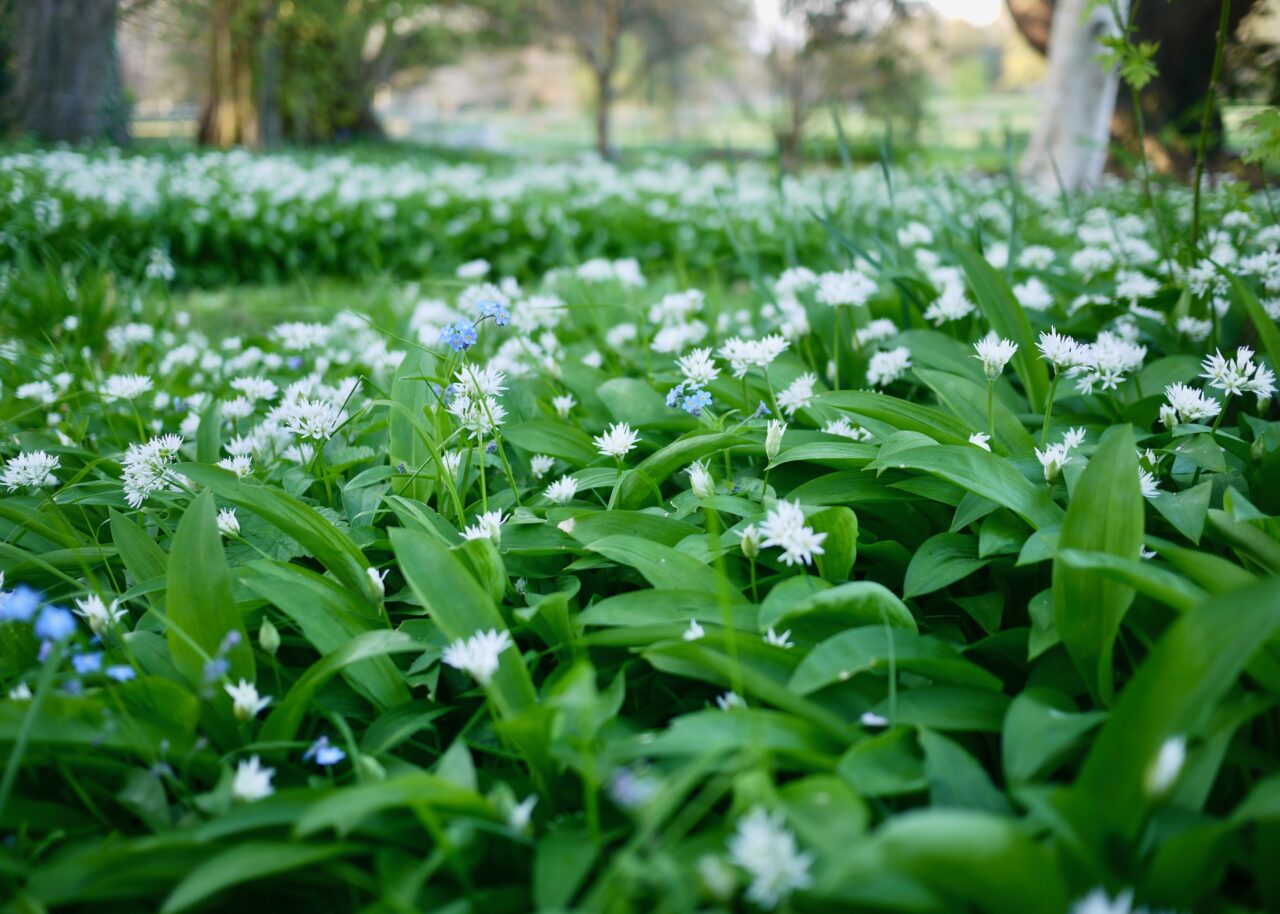
Allium ursinum
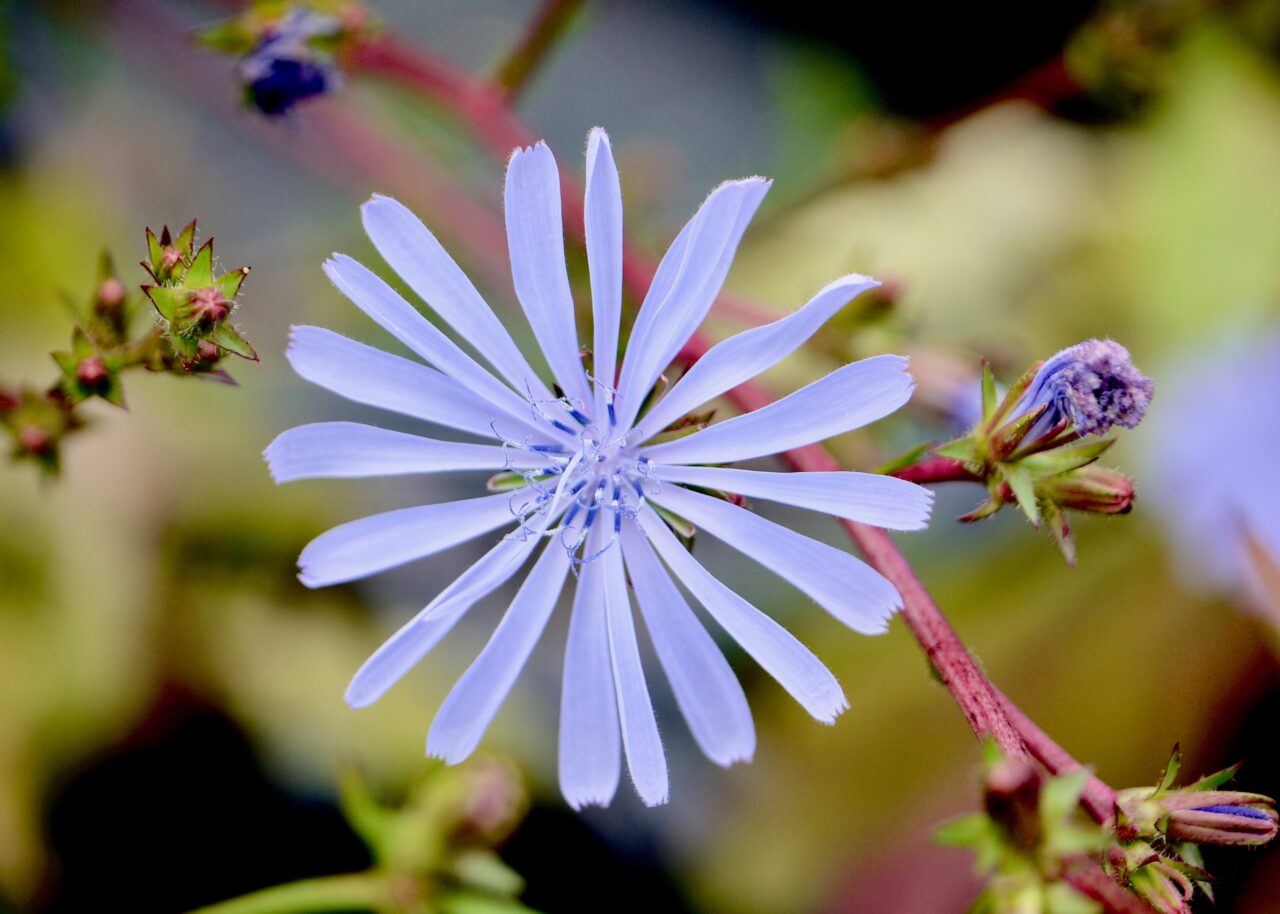
Cichorium intybus
Allium ursinum, wild garlic or ramsons, is another native wildflower of the woodland, all of which is edible. This is distinct from the narrow-leafed three-cornered garlic, Allium triquetrum, that many have growing in their gardens. The wider leaves of Allium ursinum can cause some confusion with similar toxic plants like Arum maculatum, but are at least distinct from its more common cousin. The leaves can be used in salads, or boiled, used in soups and pesto. The bulbs can be used like garlic, and the flowers are edible, too.
Urtica dioica, nettles, a common plant of rich, damp soils, has long been known for its use in nettle soup. Leaves can be cooked, removing all stinging qualities, and used in pesto. Plants are best harvested before flowering.
Chicory, Cichorium intybus, is typically seen as a roadside weed or in disturbed sites, but is a wonderful plant for a wilder garden with tall stems emerging from dandelion-like rosettes and beautiful China blue flowers. All parts are edible, with the root long cultivated as a coffee substitute. Leaves can be eaten raw, though it is rather bitter, or cooked and used in pasta or meat dishes.
While all of the above are often considered weeds, many ornamental perennials that you might have bought intentionally, just to look at, are also edible. Hostas have been eaten in Japan for generations. The new shoots can be harvested when they first appear in spring and before the leaves start to open. Eaten raw they are reminiscent of scallion or leek and they can be cooked like asparagus. The flowers in summer are also edible.
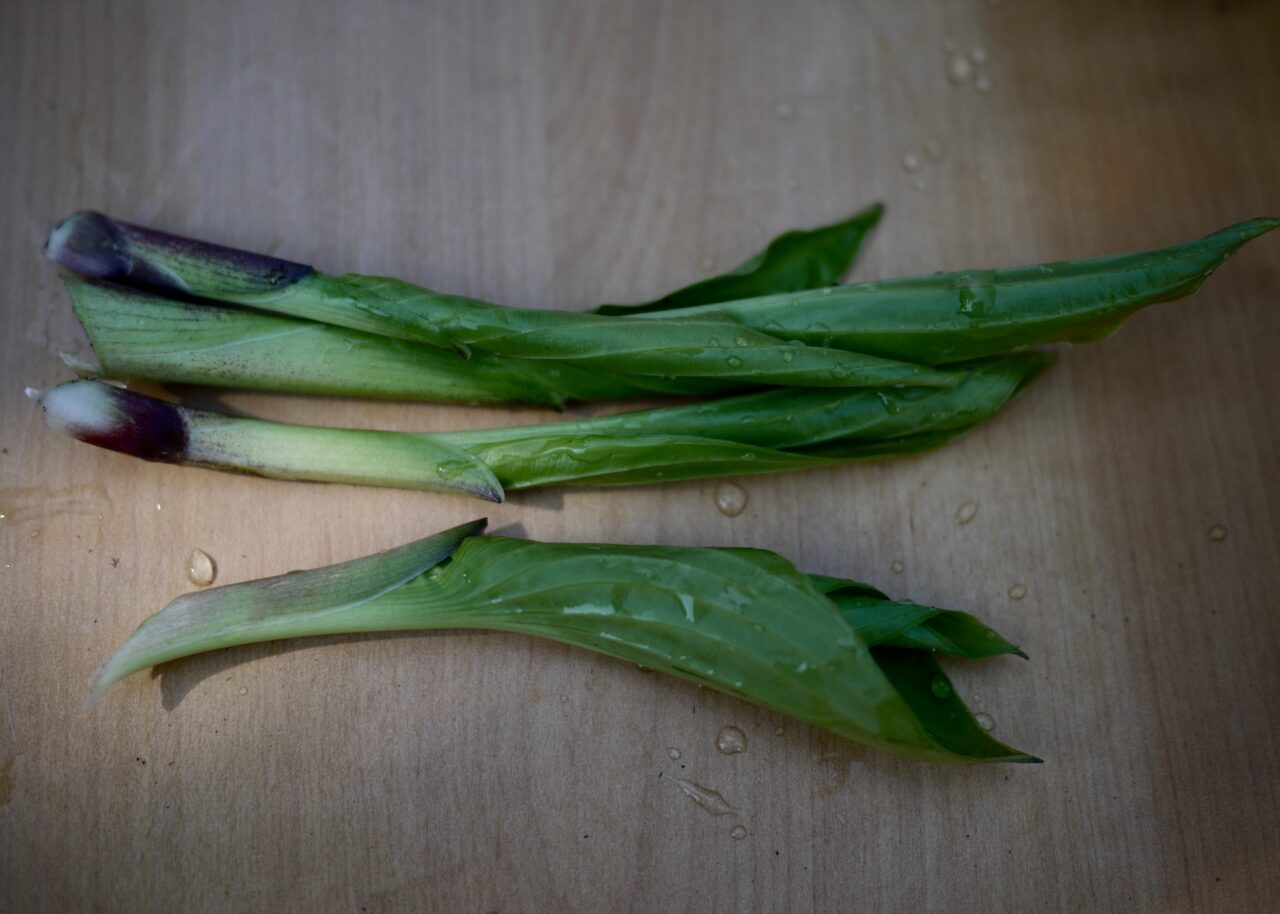
Hosta shoots
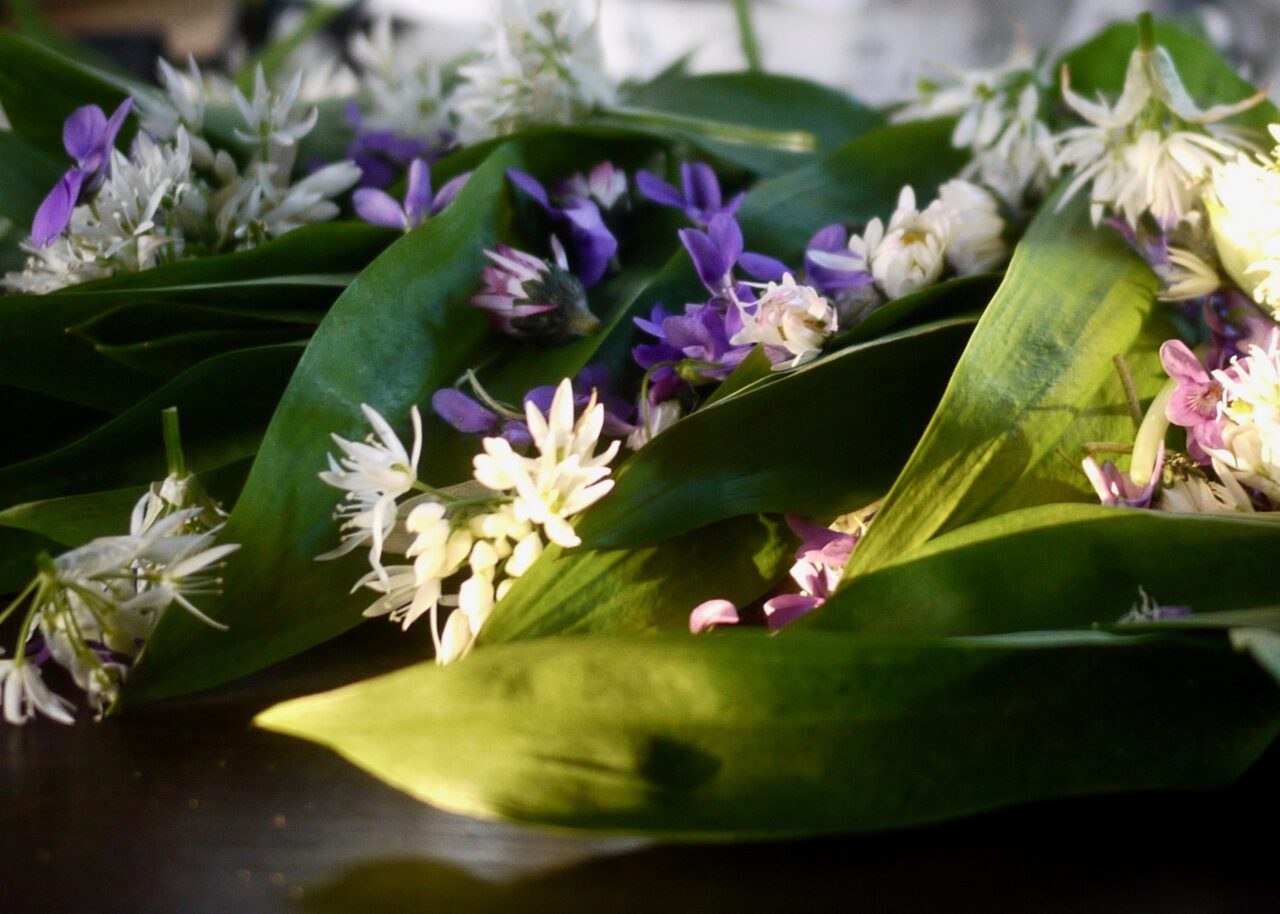
Edible Flowers in Spring
Similarly, the new shoots of many bamboo species have been harvested and eaten in Asia for centuries, and they are eaten in stir-fries, soups, and curries. Harvesting shoots is a good way to thin out running bamboo species like Chimonobambusa quadrangularis, the yellow-stem bamboo, Phyllostachys aureosulcata, and the timber bamboo Phyllostachys edulis. Bamboo shoots should be cooked and not eaten raw.
Another spring crop is Matteuccia struthiopteris, the fiddle-head or ostrich fern. The new croziers of tightly curled leaves can be removed, cleaned of their papery protective covering and cooked for omelettes, stir-fries, or on their own in a little butter. They have a quality a little like asparagus.
For summer flowers, all parts of the day lily, or Hemerocallis, is edible. The tubers can be used like a root vegetable, and he leaves, flower buds, and flowers themselves are also edible.
Many plants have edible flowers, like Violas, Hesperis (whose leaves are also eaten), Phlox paniculata varieties, and the evening primrose, Oenothera all can be used to decorate dishes.
Many more have aromatic foliage that are wonderful in teas: Monarda, Agastache, Salvia officinalis (sage), and Aloysia citriodora (lemon verbena), which is also great in ice cream or lemonades.
So just because you didn’t buy a plant to eat it, or didn’t buy it at all, it doesn’t mean you can’t. Do some due diligence first, but you may well unlock a hidden quality you didn’t know existed.